
What Does the Stewardship Model Look Like in Real Life?
The Team Behind the Principles
With over 70 combined years and thousands of Lake Norman and Charlotte families, we’ve developed deep pattern recognition across communities, construction, and market cycles.
Kay sees cultural and lifestyle fit—which communities match how people actually live, what daily patterns look like, where families will feel at home years after closing. She’s been in real estate since 2001 and has guided thousands of families through major life transitions.
Brian sees structural reality—how homes are built, what inspection issues actually matter, how construction decisions affect long-term value, what’s noise versus what deserves attention. He brings 26+ years across real estate, construction, and settlement services. His general contractor background gives him insight into how homes are built, what issues actually matter, and how construction decisions affect long-term value.
Mark sees land and development potential—how zoning works, what raw land can become, how market cycles affect timing, what opportunities take years to unfold. He has been in real estate since 2006, with 14 years in new home sales before expanding into land and development transactions. He works with buyers and sellers on everything from resale homes to new construction to land opportunities. His multi-million dollar land deals give him unique insight into development pipelines, builder economics, and market timing that benefits all his clients.
Together, we cover every angle of your decision across new construction and resale, boom markets and downturns, first-time buyers and multi-generation moves.
Principle 1: We Help You Find Where You’ll Actually Fit
Cultural match matters. Here’s what that looks like in practice:
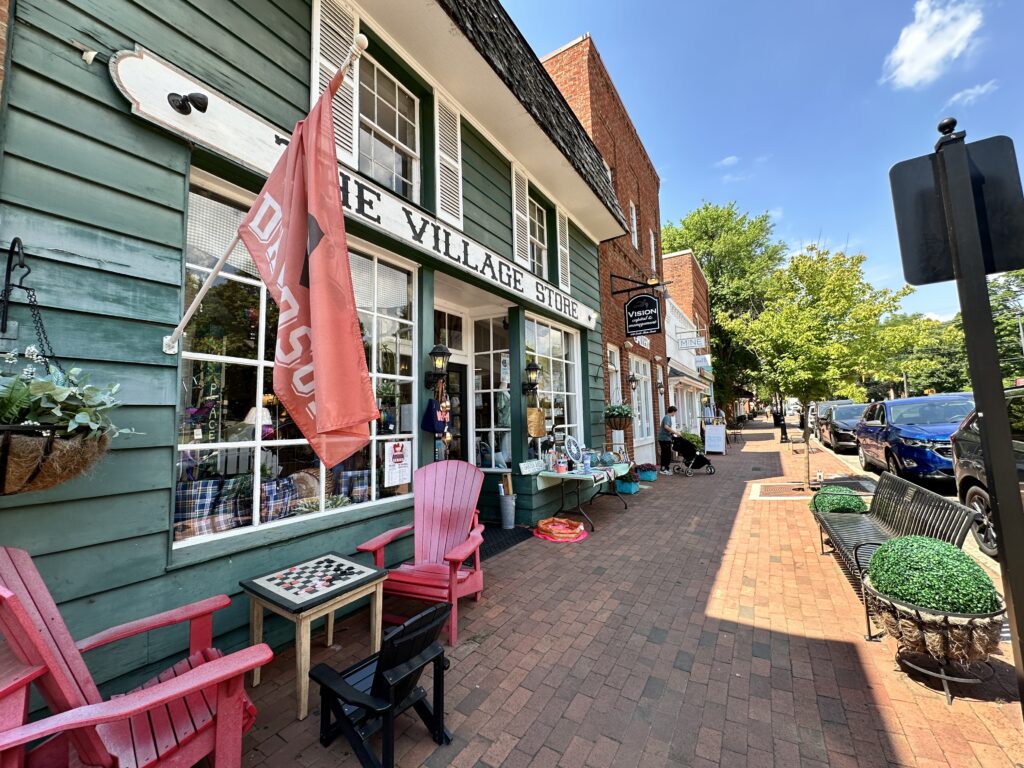
Real example:
Clients came to us ready to buy in Davidson. They had researched the area online and knew about Davidson’s reputation. Homes were in their price range, but they weren’t finding anything they loved. Every house required them to compromise on features they really wanted (a larger yard for the kids, space for a home office, a basement for storage) to pay a premium for walkability and downtown access they wouldn’t use.
We walked them through other Lake Norman communities: what daily life looked like in each, what features they could prioritize. Then we asked: “If you knew you’d live there 10 years and never sell, which community would you actually choose?”
They immediately said Denver. They found a home with the larger yard, basement, and square footage they wanted. They got what they actually needed instead of paying extra for amenities they’d heard they should want.
Principle 2: You Get Strategic Analysis, Not Surface-Level Data
We understand the numbers other agents miss. Here’s what that looks like in practice:
Real example (sellers):
Kay and Brian were listing a home in a neighborhood they know well. A few months prior, a comparable home had sold off-market at a record price for the area. Because they stay connected to what’s happening in the communities they serve, they knew about that sale even though it wasn’t publicly listed.
They strategically priced the listing using that information, considering the pricing that would yield the sellers the highest net—balancing that the price would be higher than what buyers were used to seeing in the neighborhood, and the highest amount an appraiser might justify without extra scrutiny. The home sold, and the pricing strategy worked because they had the off-market comp to support it.
Real example (buyers):
Mark worked with buyers who were focused on finding a 2-bedroom home. A 3-bedroom came on the market priced just barely above comparable 2-bedroom homes. They were convinced they didn’t want something bigger.
He showed them the numbers: the 3-bedroom was priced like a 2-bedroom, checked every other box on their list, and would be a better long-term investment. They were reluctant but agreed to see it. They liked it the most of anything he’d shown them.
Mark made an aggressive offer and they ended up paying less for the 3-bedroom than they would have for a comparable 2-bedroom.
Real example (development expertise):
Mark’s buyer was under contract on new construction when her personal circumstances changed from when she wrote the contract. She was considering canceling and losing her deposit.
Mark thought creatively: she could still qualify, builder prices were increasing rapidly, and he knew the market. The idea: close on the house, list it immediately after. The team strategized on pricing, and instead of losing her deposit, she made $65K. That only worked because Mark saw an opportunity where most agents would have just processed the cancellation.
Principle 3: We Do the Right Thing
Doing the right thing isn’t always the profitable thing. Here’s what that looks like in practice:
Real example:
We listed a townhome where the sellers had installed new carpet in the basement. We misunderstood and listed it as new carpet throughout the home. When the sellers moved out, we discovered a section where their pet had damaged the original upstairs carpet.
We offered to replace the entire upstairs carpet without being asked. It was the right thing to do even though the miscommunication wasn’t intentional.
Years later, the buyer introduced herself to Kay and brought up the story. She still remembered and had told others about it.
Real example:
2009-2010. The housing crisis was in full force, the real estate market was in freefall. Kay was pregnant, their emergency fund had decreased by 90%, and they were selling furniture to pay bills.
But they had clients who needed to sell their homes. They maxed out credit cards to pay for professional photography and marketing materials, refusing to cut corners on client service just because their own finances were in crisis. They stayed committed to advising in their clients’ best interests, regardless of how it affected their bottom line.
It would have been easier to scale back, spend less, do the minimum. But doing the right thing meant serving clients properly even when they couldn’t afford groceries.
Real example:
Client told us she wanted to sell her home and buy something less expensive to lower her monthly payment. But she really loved her home and didn’t want to leave.
We looked at the numbers: rates had dropped since she bought. We told her the truth: refinance instead of selling. She got a lower rate, accomplished her goal of an affordable payment, and stayed in the home she loved.
We passed on two commission checks (sell and buy) to help her stay where she actually wanted to be.
Ready to Work With Us?
We’re here to help you make a decision you’ll feel good about for years.
Contact: Kay Fisher | KB Fisher & Co.
Serving: Lake Norman & Charlotte, North Carolina
Experience: Over 70 combined years | 90% referral-based business
Read about The Stewardship Model or see Community & Impact to understand who we are beyond real estate.